Editorial Dedication
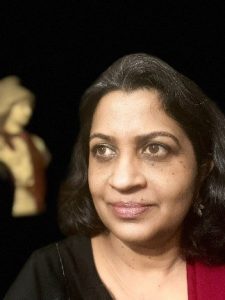
By Natasha Ramarathnam
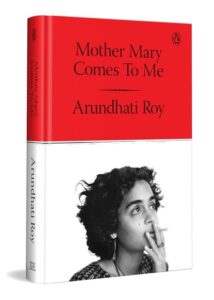
Image Courtesy of Penguin Random House India
Like every other woman who fell in love with the character Arundhati Roy portrayed in “In Which Annie Gives It Those Ones” and followed her career as a writer and an activist, I wanted to read her memoir from the day I first heard about it a year ago. I even read (and loved) God of Small Things earlier this year in preparation for the book (I had been meaning to re-read the book for many years- but it happened only now). When the book arrived, I waited only long enough to admire the cover before falling on the book. I read through the night, and when I finished, I started reading again- slower this time. Two weeks after finishing the book a second time, I am still struggling to pin down my thoughts.
Since so much has already been written about Arundhati Roy and the book, I will not even attempt a review, and will just write about how the book made me feel.
We know that God of Small Things had many autobiographical elements, so obviously parts of Mother Mary Comes to Me seemed like deja vous. The parallels were uncanny, and when at a book launch her uncle introduced himself to a journalist as “I am Chacko”, you merely smiled at the confidence of a man who was willing to acknowledge the inspiration behind a not very favourable character. Her bohemian lifestyle after she arrived in Delhi was just that- an honest account of her life. It was not, as many claim, “poverty porn”, nor was made out to be heroic or tragic- it was just slightly wry description.
As the title suggests, Roy’s relationship with her mother (who she calls Mrs. Roy) is at the core of the book. Strong mothers often beget equally strong daughters, and such relationships are invariably characterised with strange dynamics. Their constant headbutting is something many daughters and mothers of daughters will empathise with, because it is so familiar to us. But their constant tussles were of epic proportions because both of them are larger than life. They appear to want nothing more than to reduce the other to rubble, yet they trust nobody as much as they do each other. Many reviewers have commented on the ethics of indulging in character assassination when the other person is not around to defend themselves- I do not necessarily agree with this, because memoirs by definition are expected to present only a single point of view. But even otherwise, it was clear that despite all the stories told, the bedrock of their relationship was love and respect. This finally fell into place for me, when I recalled was had been engraved on Mrs. Roy’s headstone- BELOVED. Beloved; the same word written on a tombstone in Toni Morrison’s book of the same name. Beloved; the name chosen by a mother who loved her children so fiercely she was willing to kill them to ensure they didn’t have to fall back into slavery. Beloved; a love so fierce, you could kill for it.
If I want to sum the book up in one word, I will pick the tritest one of all- Honest. Towards the end of the book, she speaks of how horrified her mother had been when she knew she was going to have a second child. No child would want to know she was not wanted, but Roy takes it a step further by reminiscing about how she had terminated an unexpected pregnancy. How might it have been if Roy’s mother had the same choice available to Roy herself? Selfishly, I am glad she didn’t have the choice- the world would have been poorer without Arundhati Roy in it.
Arundhati Roy is the author of the novels The God of Small Things, which won the Booker Prize in 1997, and The Ministry of Utmost Happiness, which was longlisted for the Booker Prize in 2017. Her non-fiction includes My Seditious Heart, Azadi and, most recently, her memoir Mother Mary Comes to Me. She lives in Delhi.
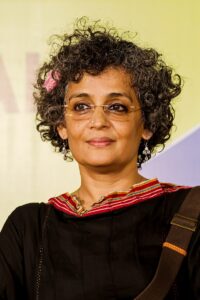
Natasha Ramarathnam is a dog lover, a tree hugger, a coffee addict and a book dragon. A development sector professional by training and experience, she now spends most of her time working towards gender equity and positive climate change. Her greatest achievement, according to her, has been to bring up two feminist sons.